Research
Pulsed Power
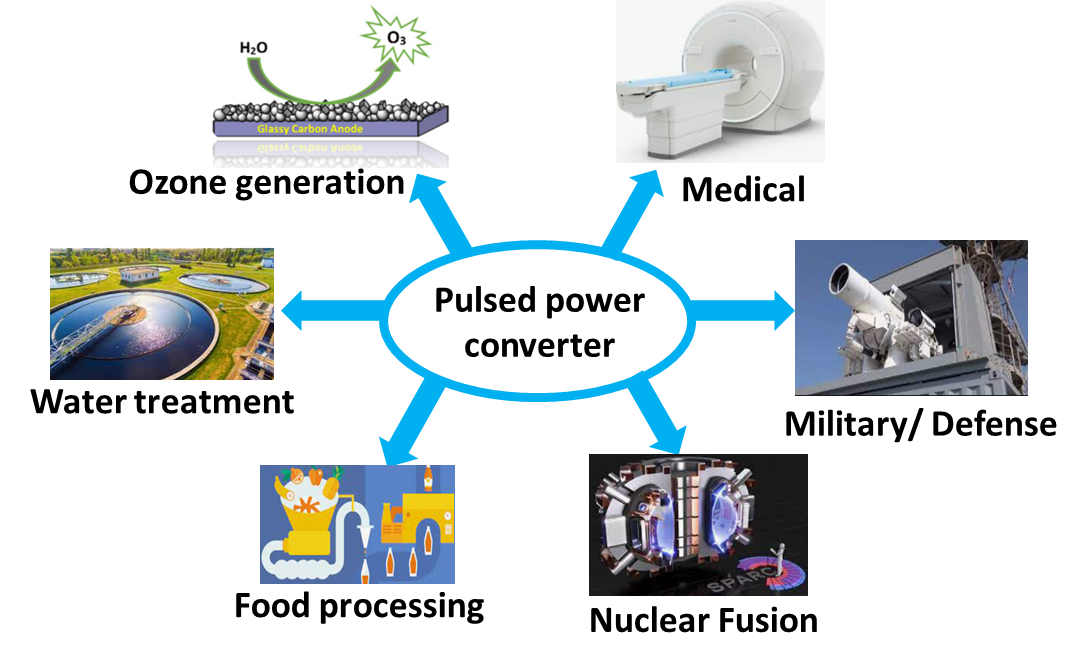
Marx Generators:
Our group leads the frontier in Solid-State Marx Generators (SSMG) and direct-switch pulsed power systems, delivering breakthrough performance where legacy designs fail:
- Ultra-fast rise times with precise flat-top control
- Inrush current mitigation & perfect stage voltage balancing
- Minimal capacitance for compact, high-power-density systems
- Arbitrary pulse shaping
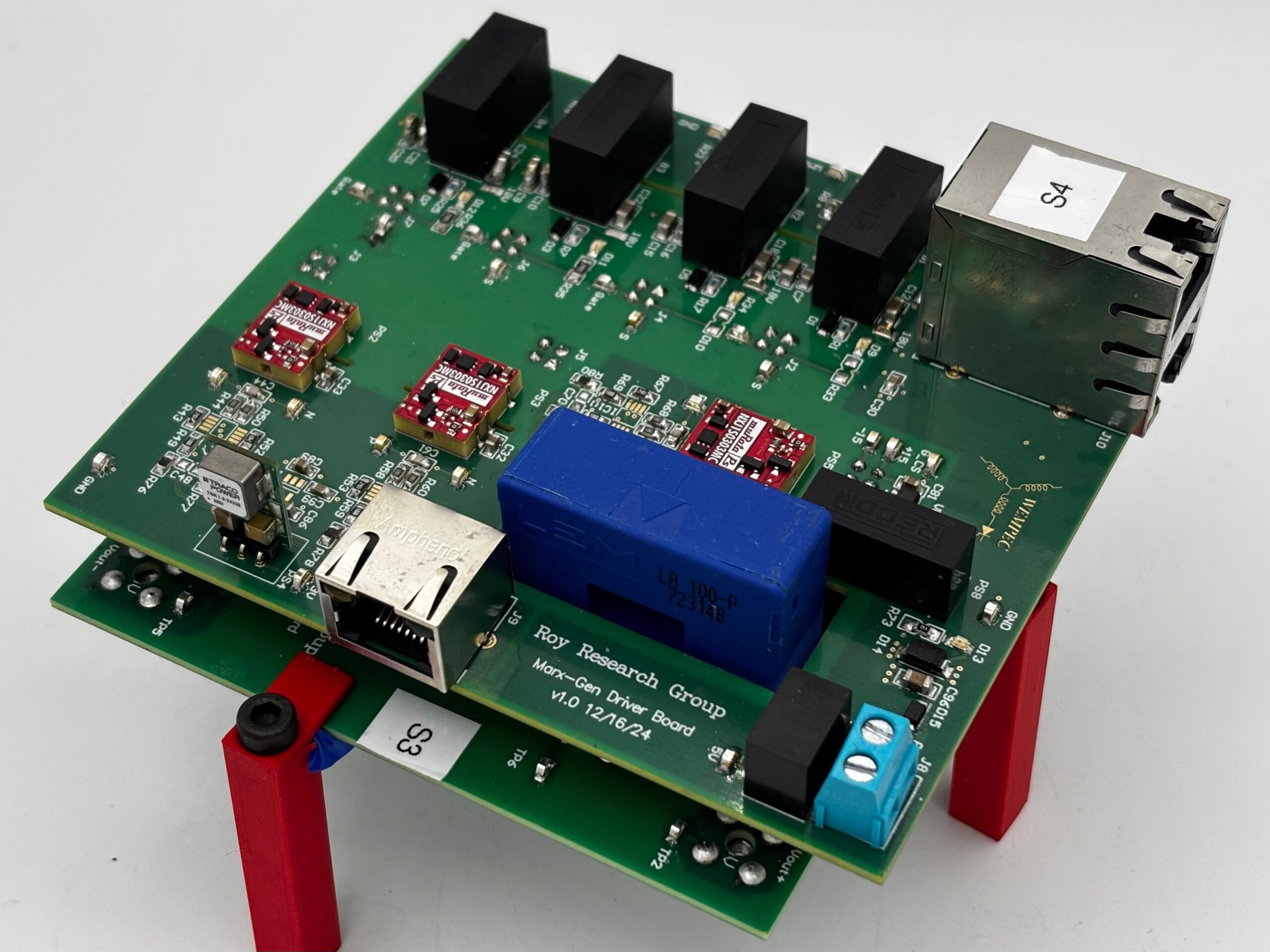
Impedance Matching for Pulse Generators:
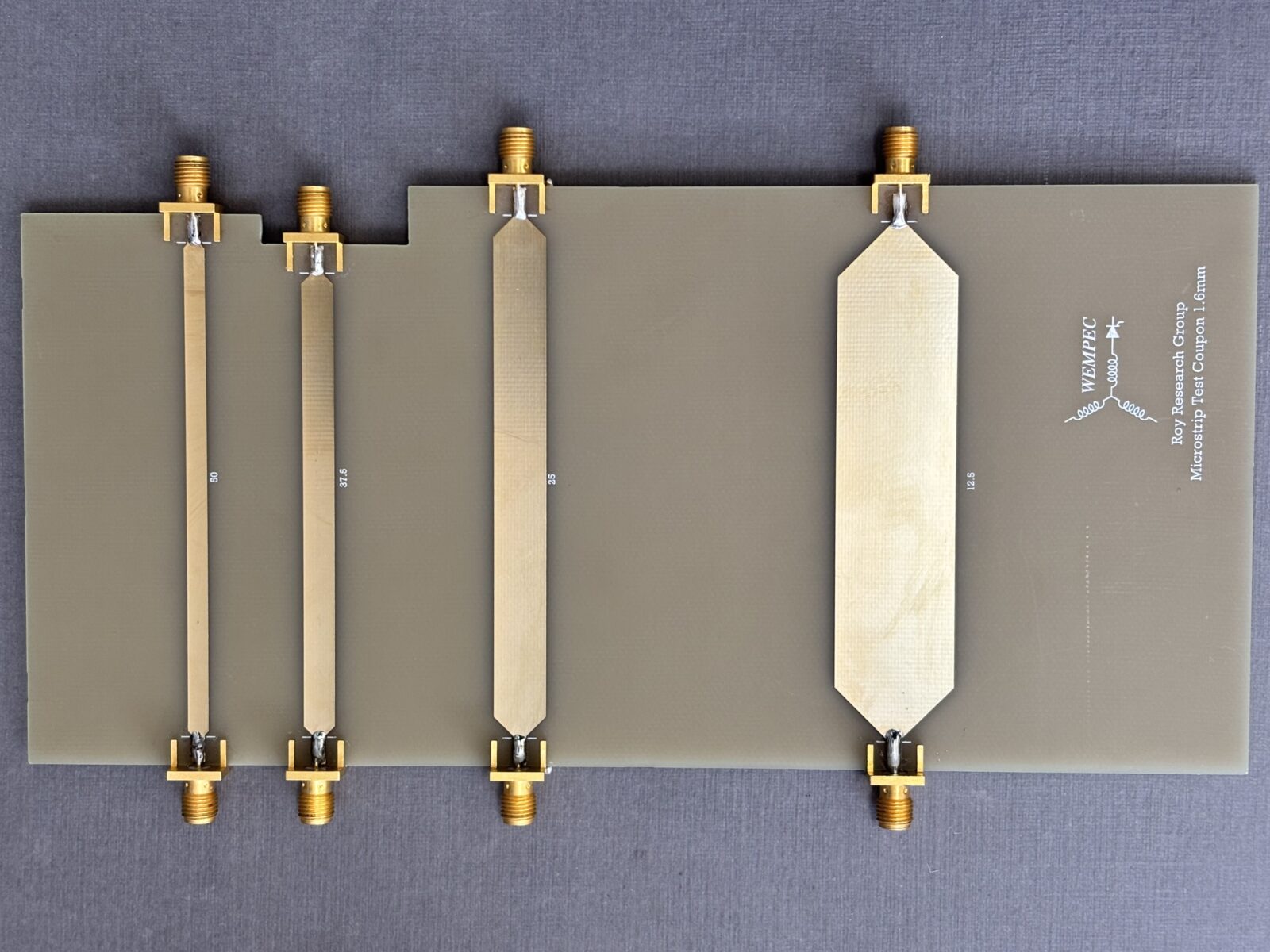
Impedance matching is a technique to improve the rise time and reduce reflections on a Marx generator during the pulse generation mode of the Marx generator.
- Can achieve single digit nanosecond level rise times
- Enhances energy delivery efficiency up to approximately 90%, reducing power losses
- Maintains pulse rise time independent of the generator’s physical size, allowing scalability without performance degradation
Series Connected Switch System:
Our group is working on advanced gate driver architectures and real-time control algorithms to achieve precise synchronization and robust voltage balancing across series-connected wide-bandgap devices, thereby enhancing the reliability and performance of next-generation HVPPS systems.
- Direct-switched High-Voltage Pulsed Power Supplies (HVPPS): Deliver a large DC-link voltage to the load through an Equivalent High Voltage Switch (EHVS).
- Equivalent High Voltage Switch (EHVS): Formed by series-connecting multiple SiC MOSFETs or GaN HEMTs.
- Number of devices in series: Chosen based on voltage-blocking needs, reliability margins, and derating requirements.
- Benefits of EHVS approach: Enables higher voltage and high-frequency operation beyond the capability of a single device.
- Critical technical challenges:
- First challenge: Uniform static voltage sharing must be ensured when all devices are OFF, as parasitic capacitances and non-linear device capacitances tend to cause uneven voltage distribution.
- Second challenge: Precise and synchronous switching is required during turn-on and turn-off transitions to avoid switching delays that lead to transient overvoltage stress and unbalanced dynamic voltage sharing.
- Consequences if imbalances are not properly managed: Can result in localized over-stress, device failure, and compromised system reliability.
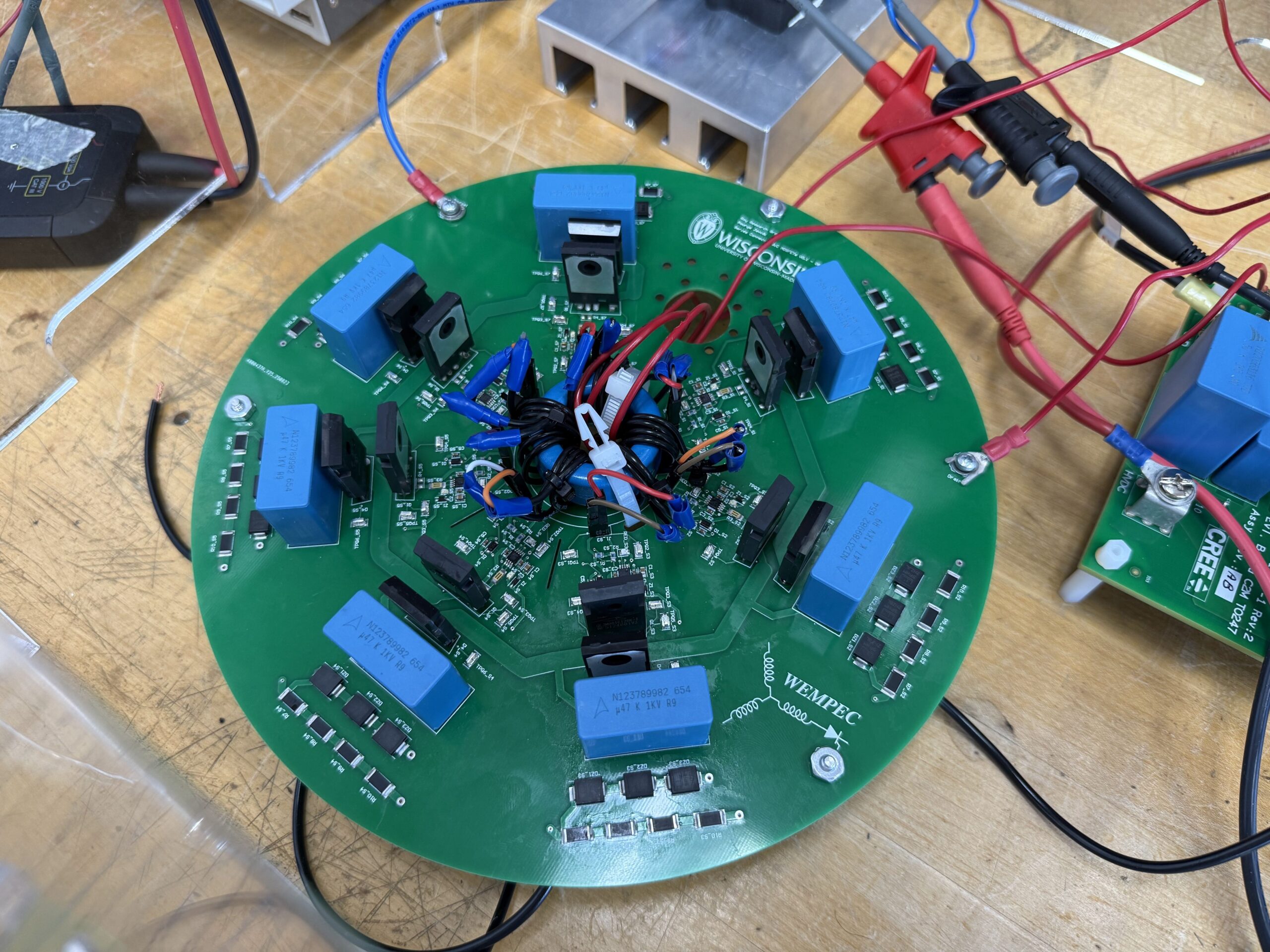
Dielectric Barrier Discharge (DBD) Power Systems:
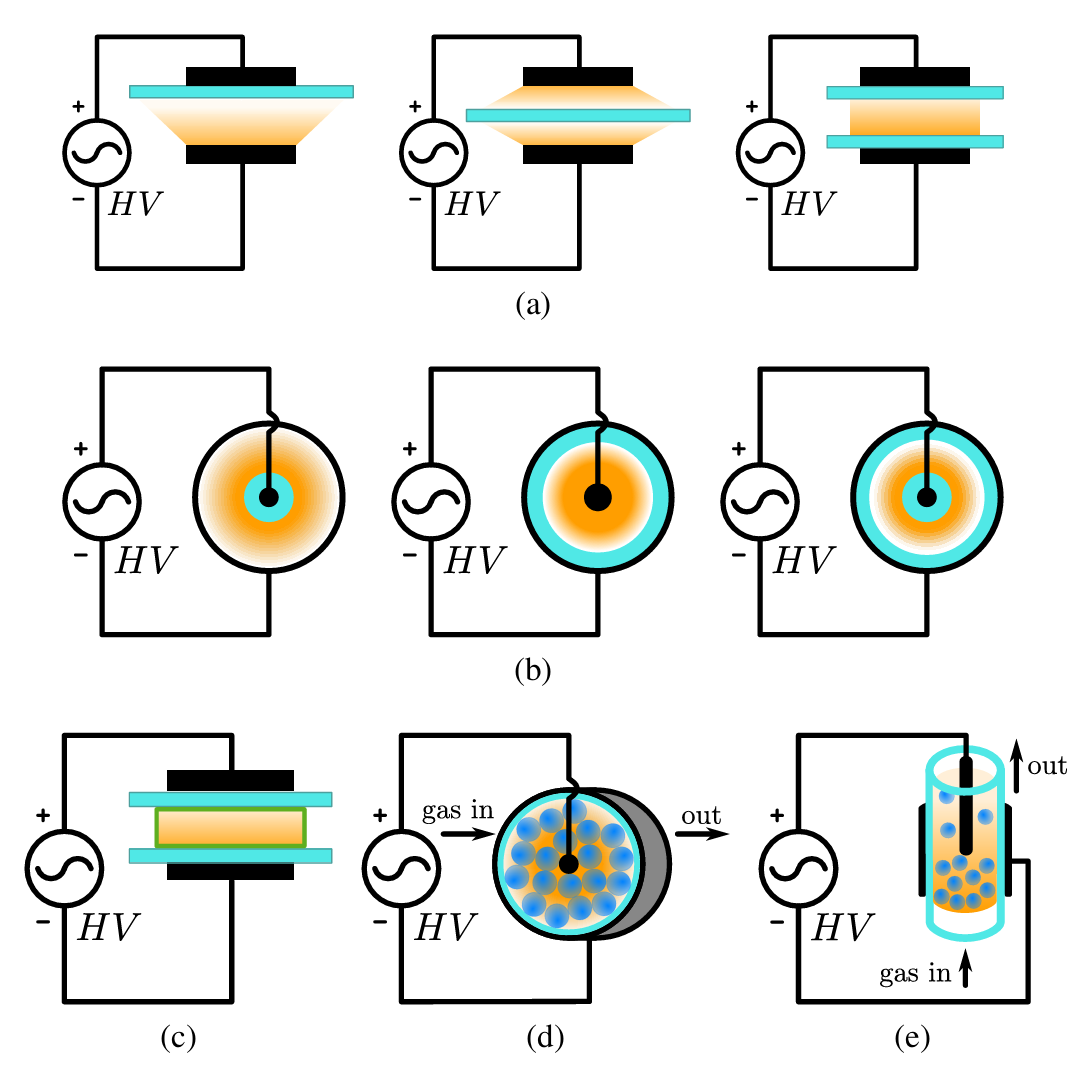
Our group researches high-voltage, high-frequency power supplies for efficient and controllable Dielectric Barrier Discharge (DBD) plasma generation. By analyzing non-linear behavior of DBD loads and combining resonant inverters, pulsed power supplies, and advanced HV transformer design, we enable reliable excitation across diverse DBD reactor geometries.
- What is DBD?
Non-thermal plasma generated by dielectric-insulated electrodes. Operates at atmospheric pressure and supports applications ranging from food sterilization and chemical conversion to surface treatment and biomedical processing. - Sinusoidal Power Supplies:
Resonant LC/LCL and Class-E inverters provide adjustable HF sinusoidal excitation with soft-switching, high gain, and efficient integration of capacitive DBD loads. - Pulsed Power Supplies (PPS):
Marx generators, pulse-forming networks, and flyback-based pulsers enable nanosecond–microsecond pulses with sharp rise times for enhanced ionization and precise energy delivery. - Waveform & Frequency Control:
Custom waveform shaping—sinusoidal, square, unipolar/bipolar pulses—with frequencies from Hz to MHz allows optimization of plasma uniformity, discharge mode, and application-specific performance. - Reactor Geometry Support:
Designed for VDBD, SDBD, in-package DBD, packed/fluidized-bed DBD, flexible DBD, and floating-electrode configurations, each with distinct impedance and HV requirements. - Key Challenges:
Highly capacitive, threshold-triggered loads; maintaining soft-switching over varying conditions; minimizing transformer parasitics; and ensuring fast, well-shaped HV pulses without ringing.
Our efforts advance next-generation DBD systems by improving plasma stability, energy efficiency, and controllability for industrial and scientific applications.
Electrolyzer Characterization
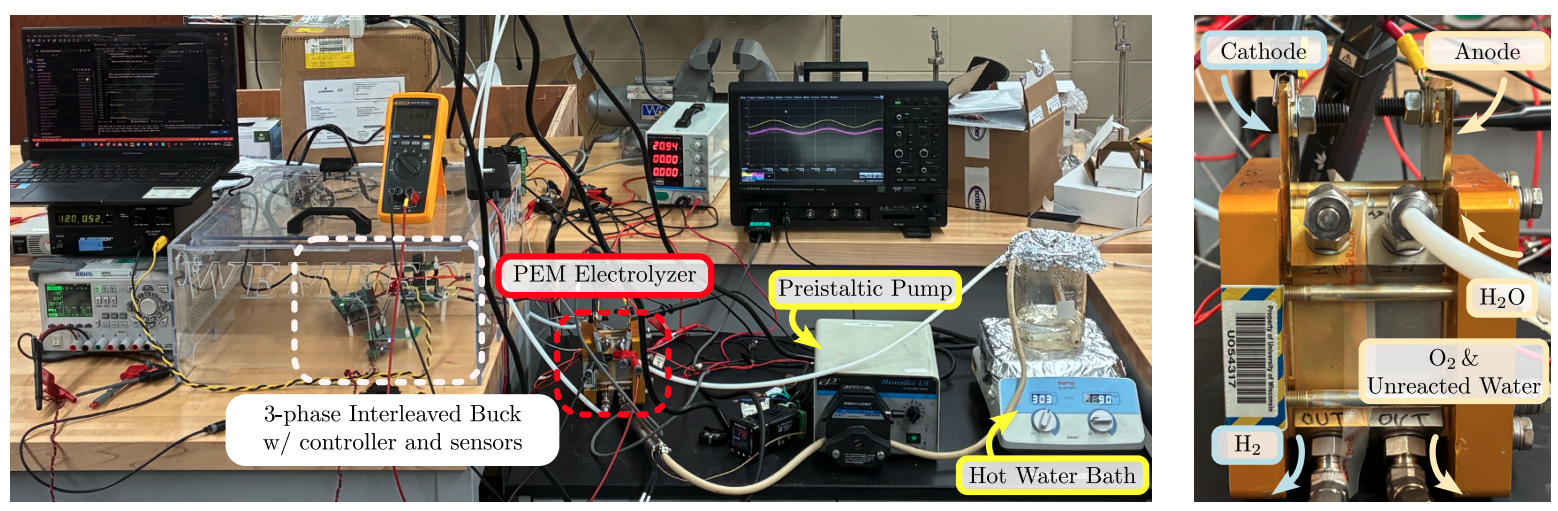
Electrolyzers are a key enabling technology for green hydrogen production, and their performance degrades over time. Membrane dehydration, catalyst degradation, and shifts in reaction kinetics develop gradually under real operating conditions, yet little of this is observable from the terminal voltage and current alone. These internal states appear only in the cell’s dynamic response, and impedance-based characterization has accordingly become the standard method for assessing electrolyzer condition. Such characterization serves two purposes: it detects degradation well before efficiency measurably declines, and it provides the electrical models required to design the power converters and controllers that drive the cell, a need that grows as electrolyzers are increasingly coupled to fluctuating renewable generation.
Our group develops power electronics that integrate this characterization into normal operation. Every electrolyzer operates behind a power converter, so rather than interrupting operation to transfer the cell to a laboratory instrument, we design converters that serve simultaneously as the power supply and the measurement instrument. This work spans control methods that superimpose precisely shaped excitation on the DC operating current, converter designs suited to the unusually low impedance of electrochemical loads, and models that connect the cell’s electrochemistry to the converter’s dynamics. The approach is validated on PEM electrolyzer hardware, with the long-term objective of making the converter in every hydrogen installation a built-in diagnostic instrument.
Modular Multilevel Converters(MMCs)
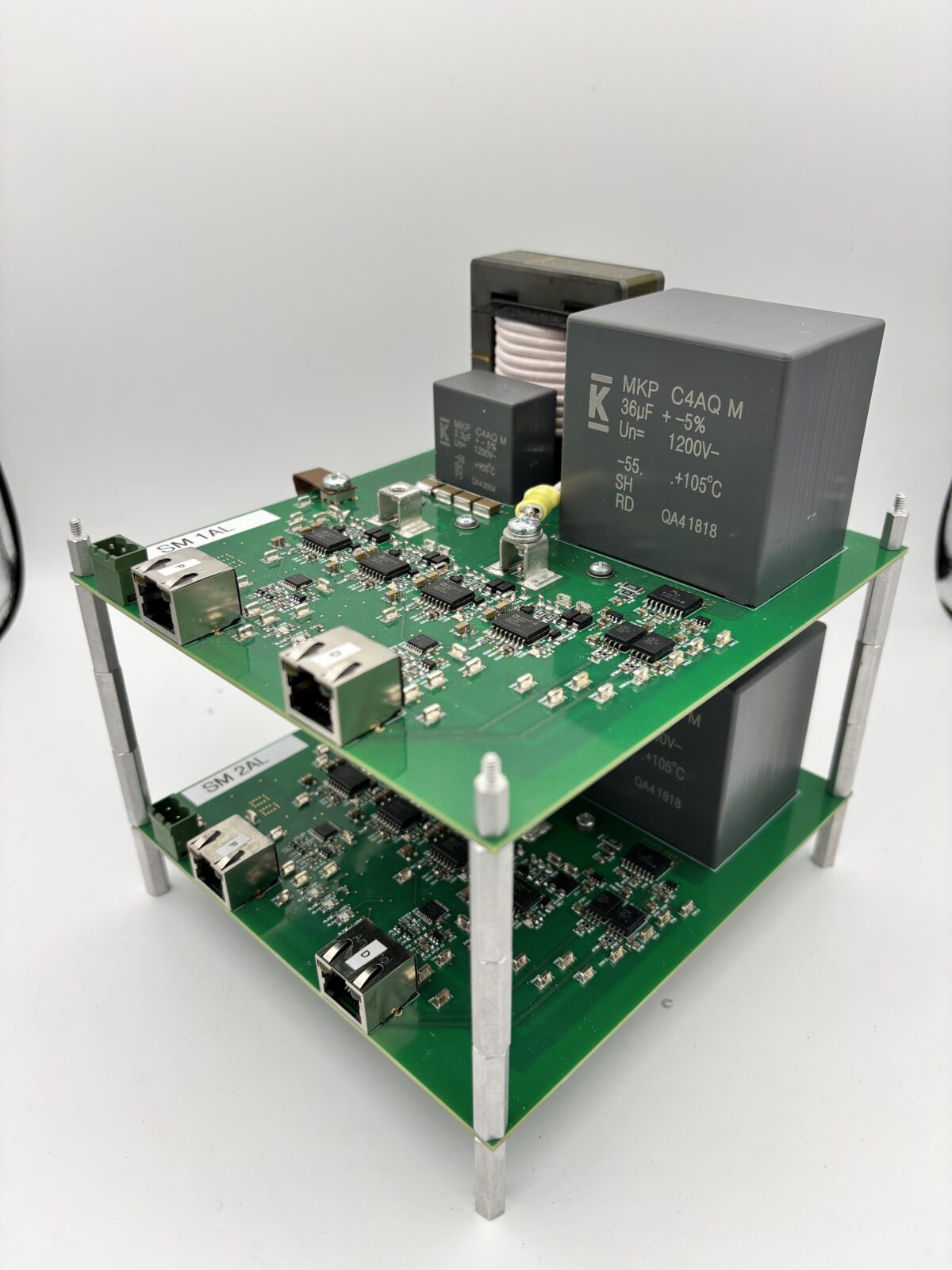
The Modular Multilevel Converter (MMC) is a widely adopted, scalable topology for medium- and high-voltage applications (HVDC, STATCOMs, drives, pulsed power), thanks to its modularity, near-sinusoidal output waveforms, and built-in redundancy. Its main limitation is large low-frequency (ω, 2ω) ripple in submodule (SM) capacitors, forcing oversized capacitance that increases size, weight, cost, and reduces dynamic performance. Active Power Decoupling MMC (APD-MMC) integrates auxiliary ripple-absorption circuits into each SM, nearly eliminating main-capacitor ripple, enabling 3–10× capacitance reduction, lower circulating currents, higher power density, and cleaner waveforms. However, the resulting multi-loop, time-periodic system demands careful control design to ensure stability and prevent ripple mishandling, voltage drift, duty saturation, or resonances.
T-Type Converters for Solar
Single-phase distributed PV inverters suffer from double-line-frequency (2ω) DC-link voltage ripple due to power mismatch, often requiring bulky, unreliable electrolytic capacitors. The single-phase T-type inverter solves this with low-capacitance film capacitors and integrated active power decoupling (APD) to buffer ripple actively. It also eliminates common-mode leakage current by connecting the PV negative directly to grid neutral. Recent GaN bidirectional devices with higher voltages enable redesign of inductors and switching frequency through loss-vs-volume optimization, delivering 97.8% efficiency at rated power and just 40.4 cm³ inductor volume for a 1 kVA PV string inverter.
Key highlights:
- Integrated APD + film capacitors replace electrolytic caps, reducing size/reliability issues while actively managing 2ω ripple
- Direct PV-to-neutral connection inherently suppresses leakage current in transformerless designs
- GaN-enabled optimization achieves ultra-high efficiency and extreme power density in compact single-phase PV inverters
Hybrid & Renewable Power Source Conversion
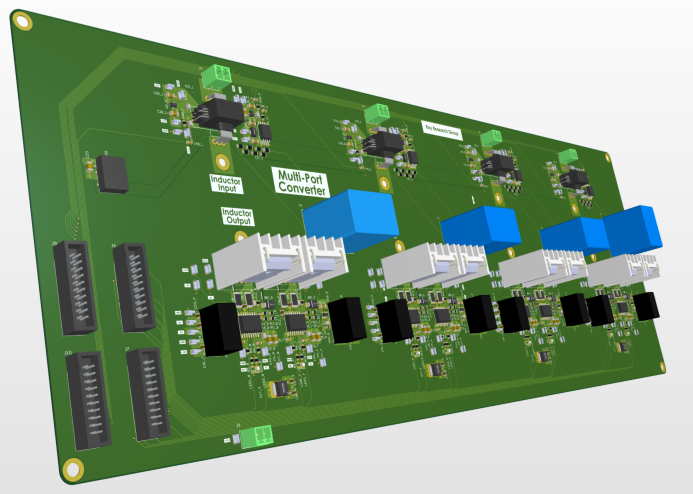
Our group develops high-gain, multi-port power converter architectures to efficiently interface renewable sources, energy storage systems, and DC loads. By extending the capabilities of the Extended-Duty-Ratio (EDR) converter, we create compact, scalable solutions for next-generation hybrid energy systems.
- Multi-Port EDR Converter:
Enables multiple input sources (e.g., PV, battery, fuel cell) to be connected to individually controlled phases, allowing independent regulation such as MPPT, battery charge/discharge control, or load management. - High Voltage Gain with Compact Design:
Interleaved inductors and switched-capacitor stages provide significantly higher voltage gain than a conventional boost converter, while distributing device stress and maintaining high efficiency. - Reduced Voltage Stress via Phase-Shift Control:
A modified phase-shift strategy minimizes switch voltage stress across wide duty-ratio ranges, enabling the use of lower-voltage, lower-loss semiconductor devices . - Bidirectional Operation:
Supports energy storage interfaces by replacing diodes with complementary active switches, enabling regulated charge/discharge and flexible power-flow control for hybrid systems. - Applications:
Renewable energy integration, hybrid DC microgrids, PV-battery systems, electrolyzers, EV charging nodes, and high-gain DC distribution.
Our work enables compact, high-efficiency power processing for modern hybrid and renewable energy systems while providing the control flexibility required for diverse source characteristics.
Space Power Management :
- Core-less magnetics & system-level optimization for deep-space reliability
- Radiation-hardened wide-bandgap (WBG) devices
- Modular + redundant architectures with interleaving
- Partial power processing → maximum efficiency, minimum mass
- Active capacitor circuits for ultra-low mass energy storage
Power electronic converters are governed by well-understood physics, yet in the field their behavior is shaped by parameters that drift, components that age, and measurements buried in switching noise. We are building machine learning that works with this physics instead of ignoring it. Rather than treating a converter as a black box, we carry the governing equations inside the learning process, so our models estimate what is happening inside a converter, hold up under real-world disturbances, and stay light enough to run on the hardware at the edge.
We are pursuing two threads.
Physics-Informed Estimation that Survives EMI
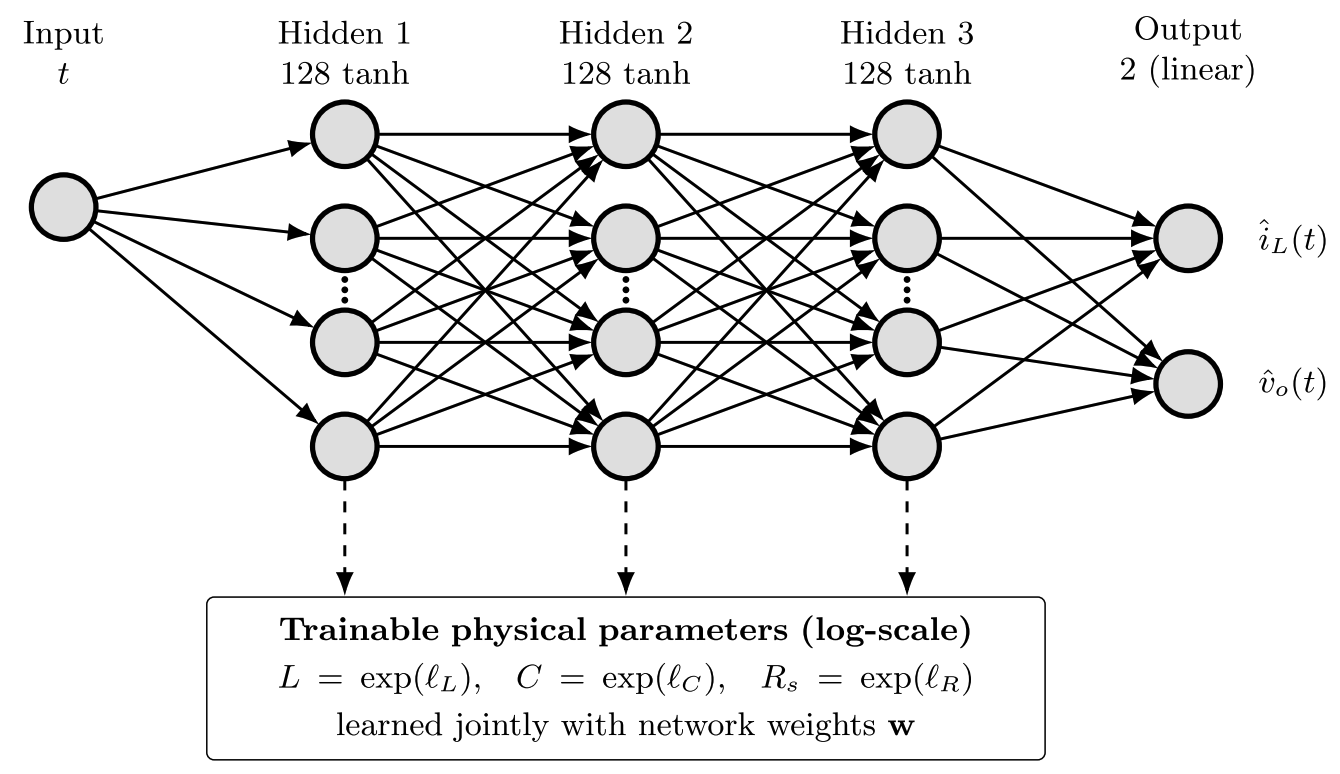
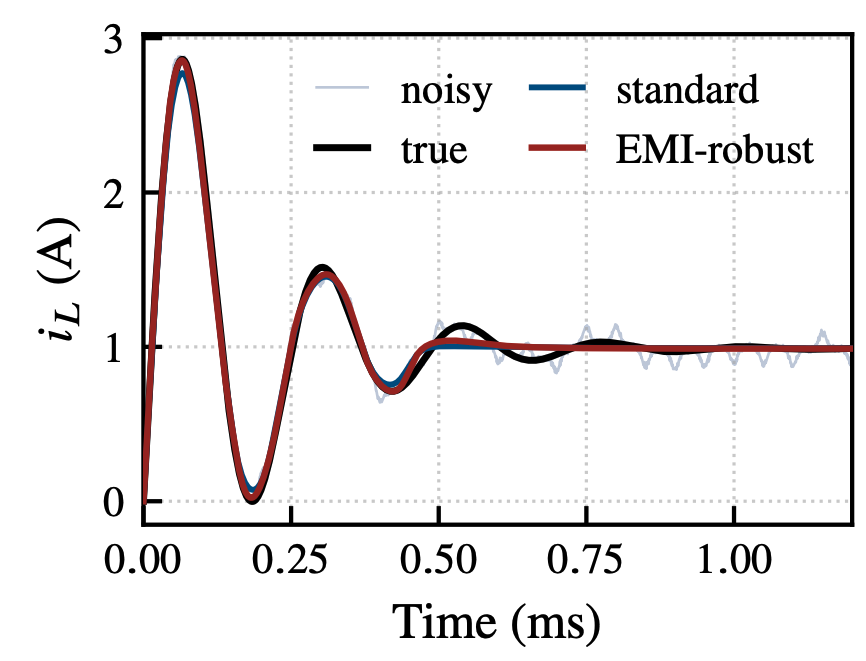
Accurate knowledge of a converter’s internal parameters, such as inductance, resistance, and capacitance, underpins control, diagnosis, and health monitoring. In practice we have to infer these quantities from voltage and current waveforms that are contaminated by the very switching action that makes the converter work, and conventional estimators degrade as this electromagnetic interference (EMI) grows.
We are developing physics-informed neural networks (PINNs) that estimate converter parameters directly from measured transients while enforcing the circuit’s differential equations as a constraint. Because we bake the physics into the loss, the estimate stays anchored to what is physically possible rather than to the noise. We focus this thread on robustness, that is, recovering trustworthy parameters even when the measurements are noisy, and doing it from short, ordinary operating transients rather than dedicated test signals.
Spiking Neural Networks for Edge Deployment
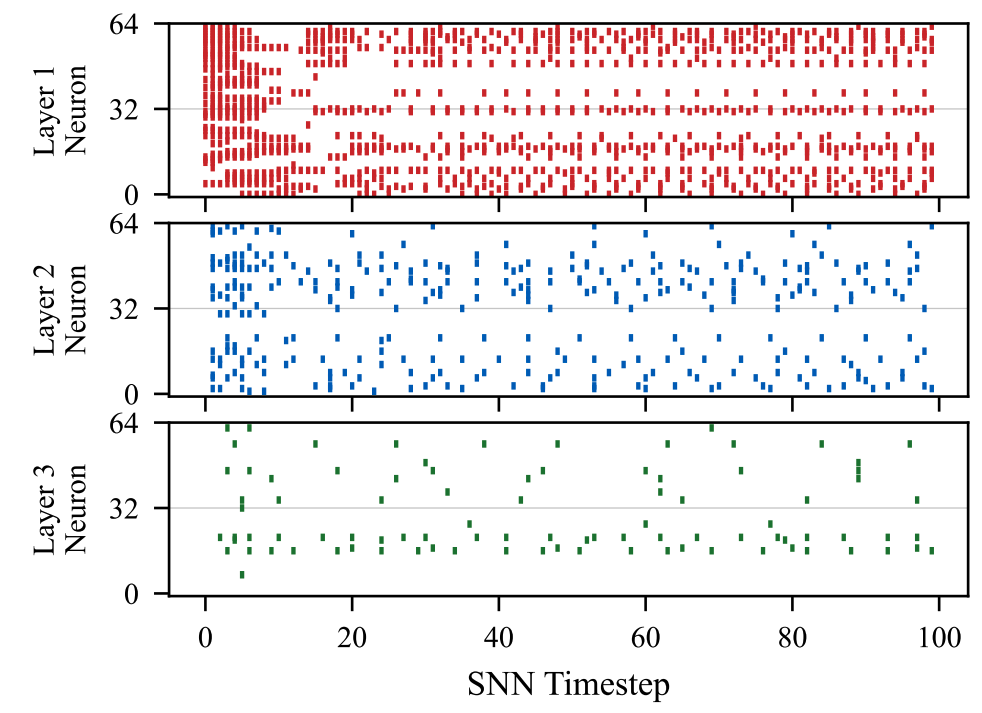
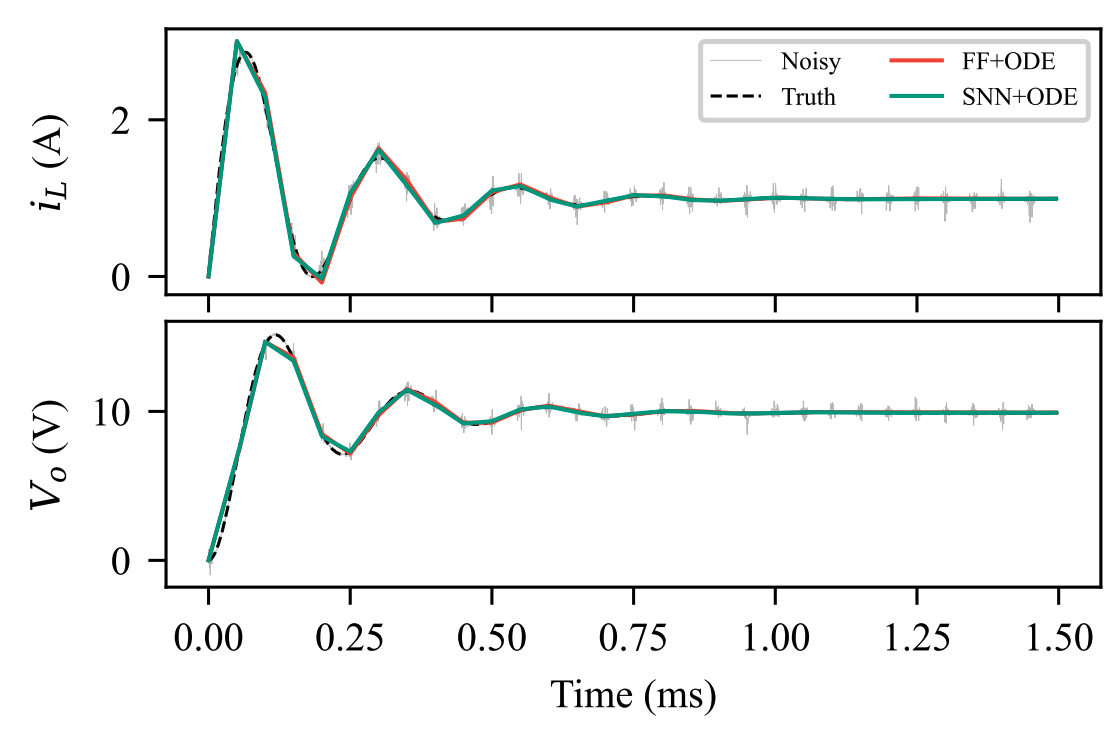
Most machine learning for power electronics assumes a GPU sitting somewhere off-board. That assumption breaks down inside a converter, where the power, cost, and thermal budget for computation are small. We are working to close that gap.
We are studying spiking neural networks (SNNs), the event-driven models that underpin neuromorphic hardware, as a way to run physics-informed estimation at a milliwatt scale. Spiking models communicate through sparse events rather than dense arithmetic, so we can map the same physics-informed formulation onto low-power neuromorphic processors. Our goal is not to beat a GPU on raw accuracy but to deliver an estimate that is good enough at a fraction of the energy, close to the converter and in real time. We see this as a path toward embedded intelligence that lives on the power stage itself.