Research
Pulsed Power
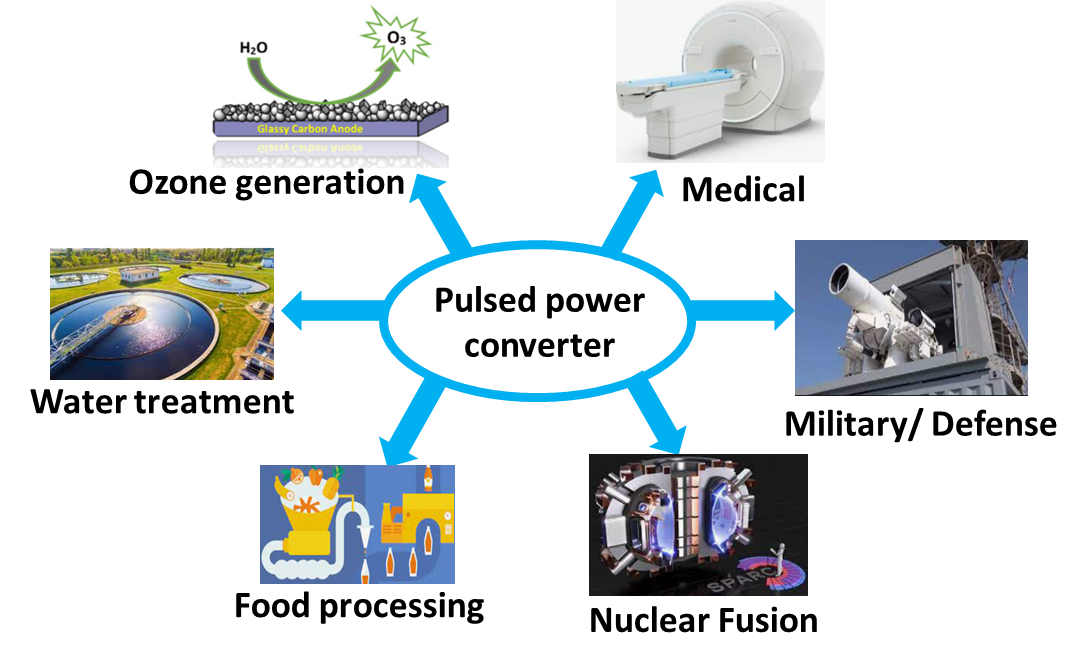
Marx Generators:
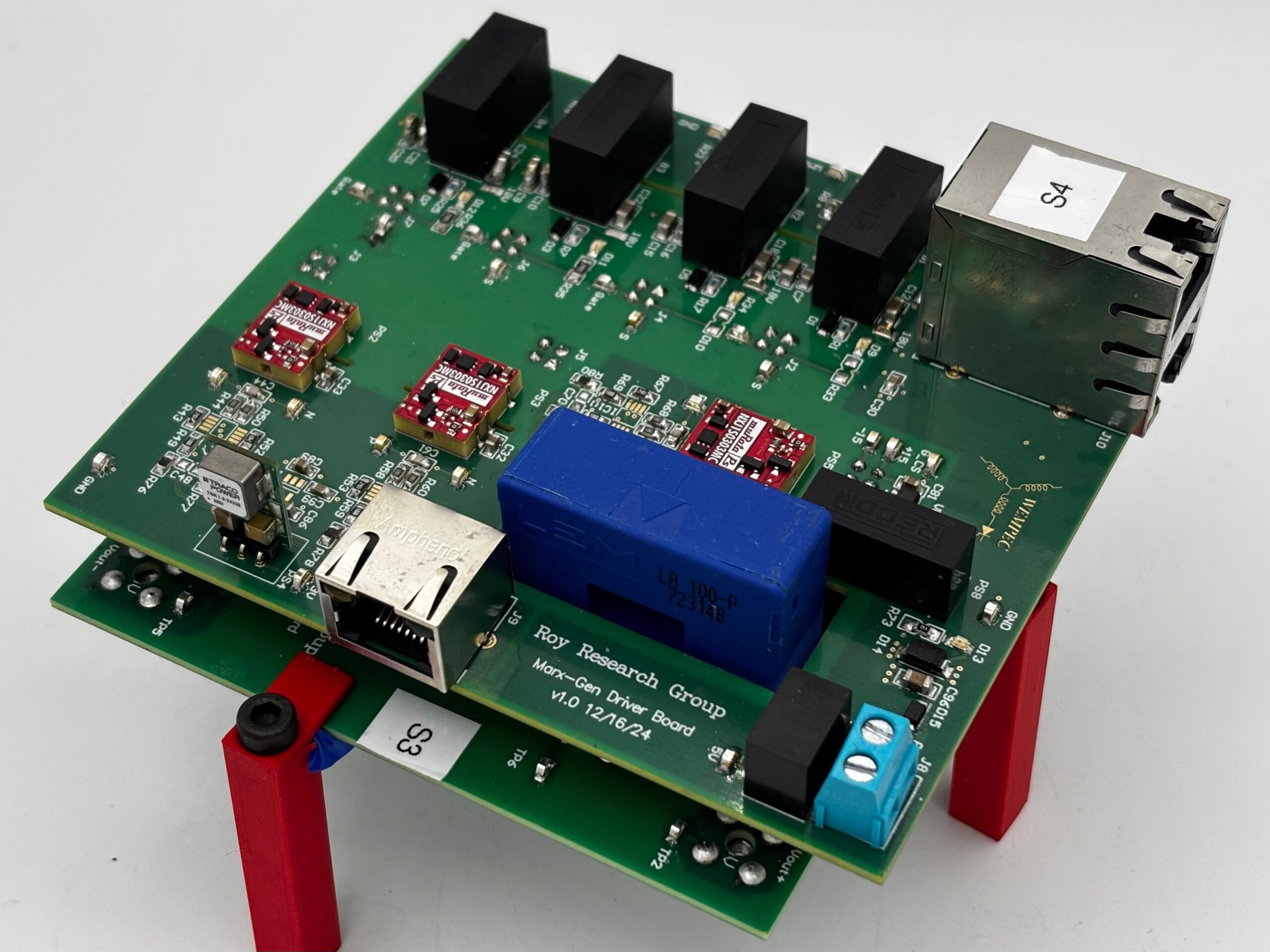
Our group leads the frontier in Solid-State Marx Generators (SSMG) and direct-switch pulsed power systems, delivering breakthrough performance where legacy designs fail:
- Ultra-fast rise times with precise flat-top control
- Inrush current mitigation & perfect stage voltage balancing
- Minimal capacitance for compact, high-power-density systems
- Arbitrary pulse shaping
Impedance Matching for Pulse Generators:
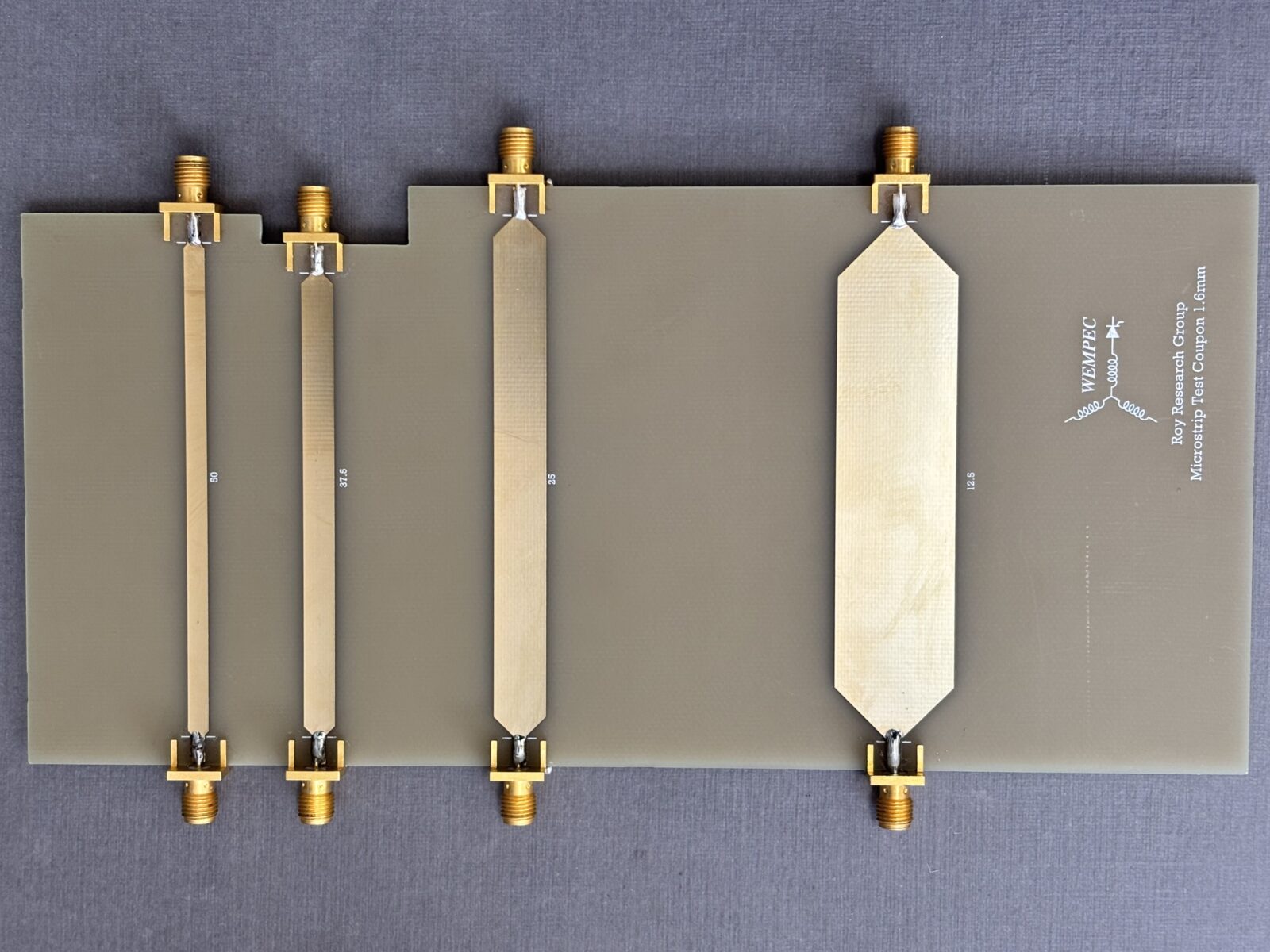
Impedance matching is a technique to improve the rise time and reduce reflections on a Marx generator during the pulse generation mode of the Marx generator.
- Can achieve single digit nanosecond level rise times
- Enhances energy delivery efficiency up to approximately 90%, reducing power losses
- Maintains pulse rise time independent of the generator’s physical size, allowing scalability without performance degradation
Series Connected Switch System:
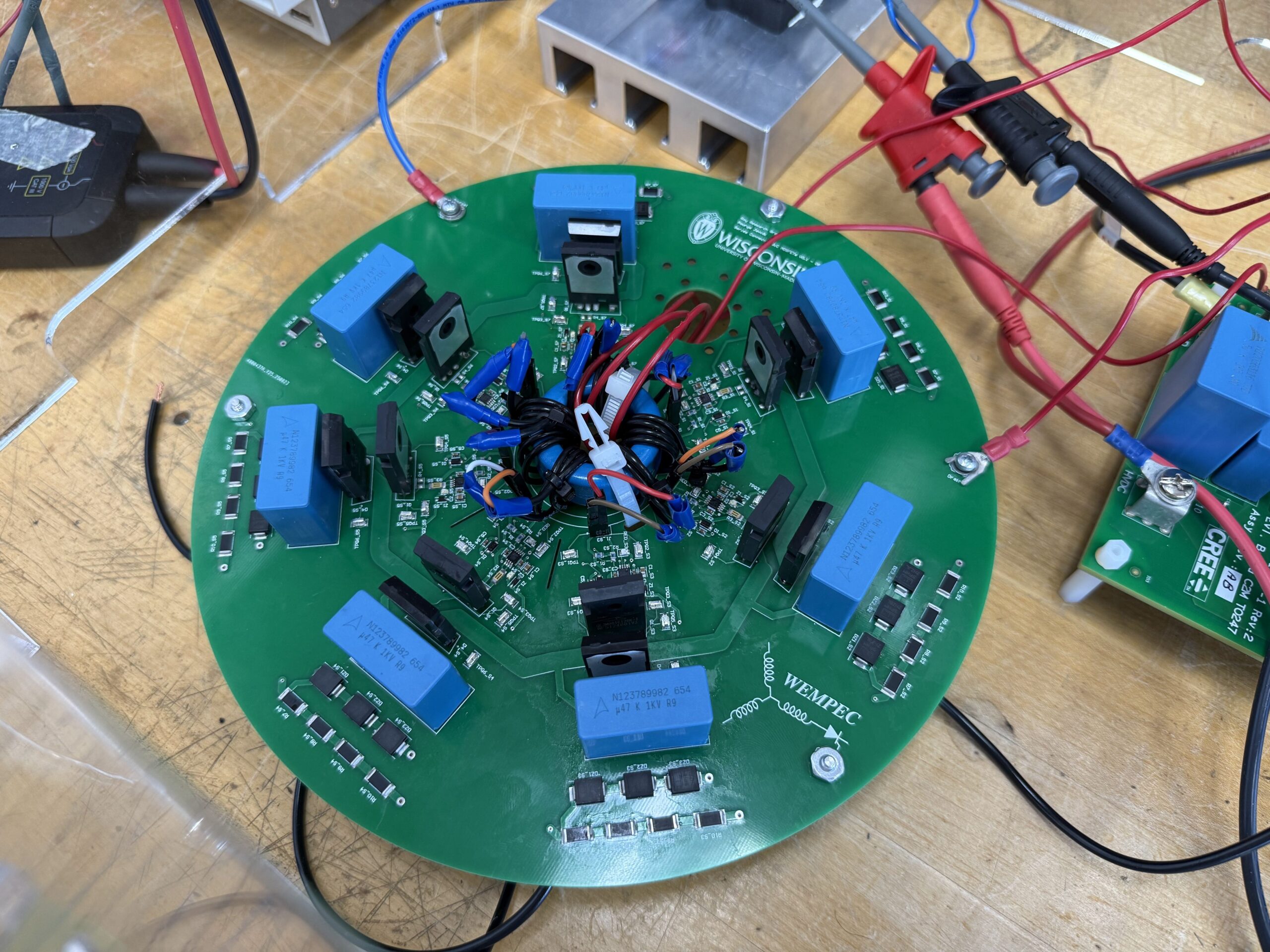
Our group is working on advanced gate driver architectures and real-time control algorithms to achieve precise synchronization and robust voltage balancing across series-connected wide-bandgap devices, thereby enhancing the reliability and performance of next-generation HVPPS systems.
- Direct-switched High-Voltage Pulsed Power Supplies (HVPPS): Deliver a large DC-link voltage to the load through an Equivalent High Voltage Switch (EHVS).
- Equivalent High Voltage Switch (EHVS): Formed by series-connecting multiple SiC MOSFETs or GaN HEMTs.
- Number of devices in series: Chosen based on voltage-blocking needs, reliability margins, and derating requirements.
- Benefits of EHVS approach: Enables higher voltage and high-frequency operation beyond the capability of a single device.
- Critical technical challenges:
- First challenge: Uniform static voltage sharing must be ensured when all devices are OFF, as parasitic capacitances and non-linear device capacitances tend to cause uneven voltage distribution.
- Second challenge: Precise and synchronous switching is required during turn-on and turn-off transitions to avoid switching delays that lead to transient overvoltage stress and unbalanced dynamic voltage sharing.
- Consequences if imbalances are not properly managed: Can result in localized over-stress, device failure, and compromised system reliability.
Dielectric Barrier Discharge (DBD) Power Systems:
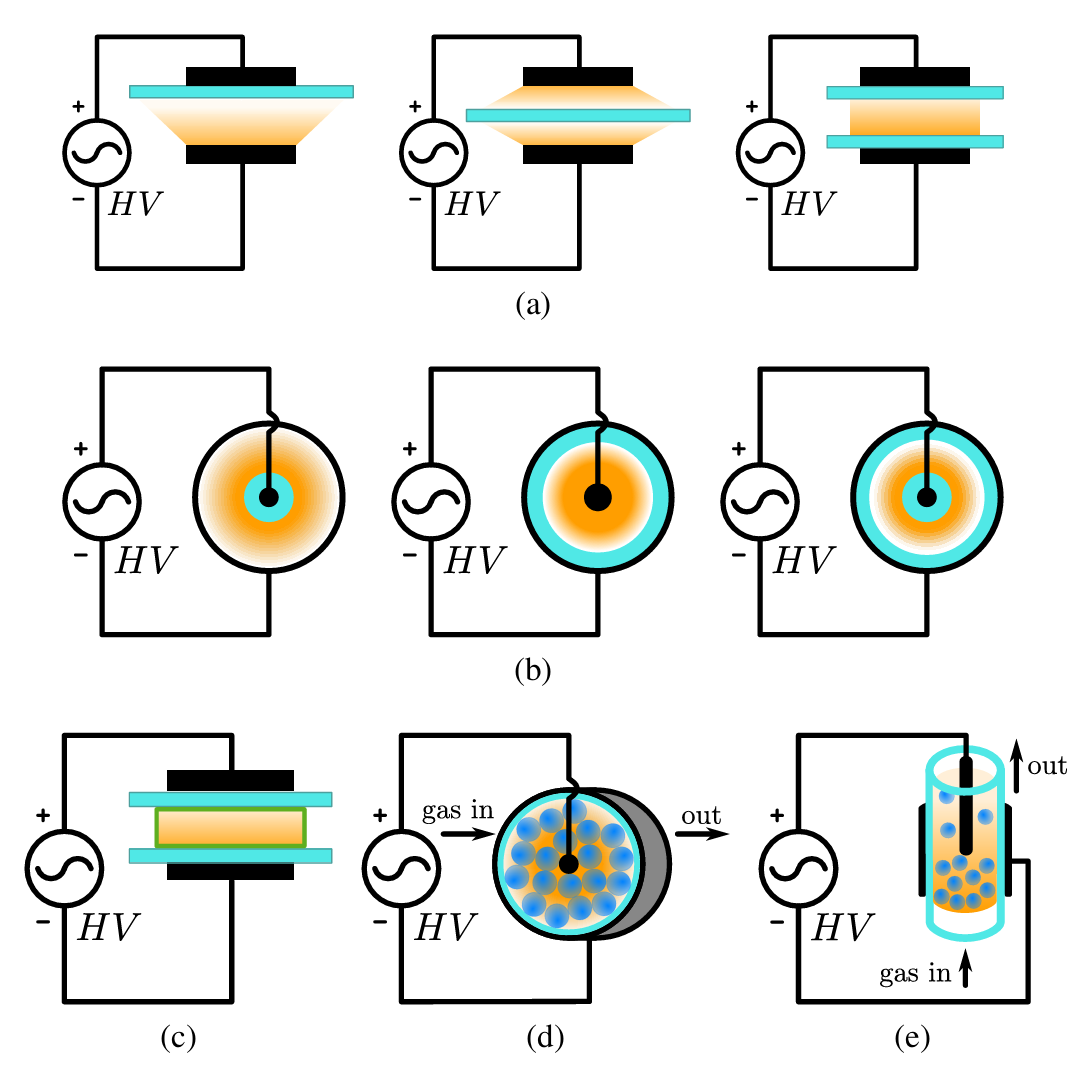
Our group researches high-voltage, high-frequency power supplies for efficient and controllable Dielectric Barrier Discharge (DBD) plasma generation. By analyzing non-linear behavior of DBD loads and combining resonant inverters, pulsed power supplies, and advanced HV transformer design, we enable reliable excitation across diverse DBD reactor geometries.
- What is DBD?
Non-thermal plasma generated by dielectric-insulated electrodes. Operates at atmospheric pressure and supports applications ranging from food sterilization and chemical conversion to surface treatment and biomedical processing. - Sinusoidal Power Supplies:
Resonant LC/LCL and Class-E inverters provide adjustable HF sinusoidal excitation with soft-switching, high gain, and efficient integration of capacitive DBD loads. - Pulsed Power Supplies (PPS):
Marx generators, pulse-forming networks, and flyback-based pulsers enable nanosecond–microsecond pulses with sharp rise times for enhanced ionization and precise energy delivery. - Waveform & Frequency Control:
Custom waveform shaping—sinusoidal, square, unipolar/bipolar pulses—with frequencies from Hz to MHz allows optimization of plasma uniformity, discharge mode, and application-specific performance. - Reactor Geometry Support:
Designed for VDBD, SDBD, in-package DBD, packed/fluidized-bed DBD, flexible DBD, and floating-electrode configurations, each with distinct impedance and HV requirements. - Key Challenges:
Highly capacitive, threshold-triggered loads; maintaining soft-switching over varying conditions; minimizing transformer parasitics; and ensuring fast, well-shaped HV pulses without ringing.
Our efforts advance next-generation DBD systems by improving plasma stability, energy efficiency, and controllability for industrial and scientific applications.
Modular Multilevel Converters(MMCs)
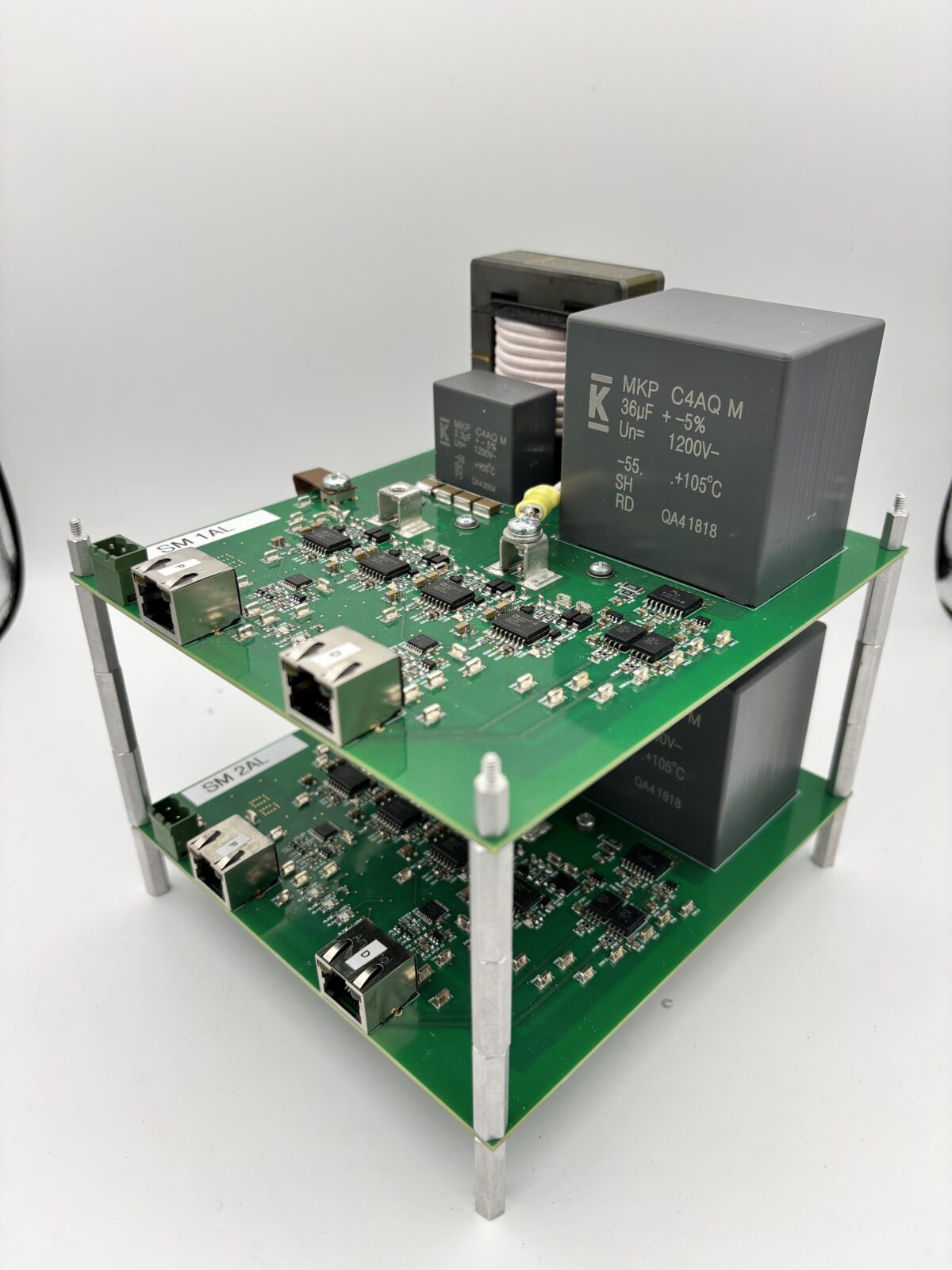
The Modular Multilevel Converter (MMC) is a widely adopted, scalable topology for medium- and high-voltage applications (HVDC, STATCOMs, drives, pulsed power), thanks to its modularity, near-sinusoidal output waveforms, and built-in redundancy. Its main limitation is large low-frequency (ω, 2ω) ripple in submodule (SM) capacitors, forcing oversized capacitance that increases size, weight, cost, and reduces dynamic performance. Active Power Decoupling MMC (APD-MMC) integrates auxiliary ripple-absorption circuits into each SM, nearly eliminating main-capacitor ripple, enabling 3–10× capacitance reduction, lower circulating currents, higher power density, and cleaner waveforms. However, the resulting multi-loop, time-periodic system demands careful control design to ensure stability and prevent ripple mishandling, voltage drift, duty saturation, or resonances.
T-Type Converters for Solar
Single-phase distributed PV inverters suffer from double-line-frequency (2ω) DC-link voltage ripple due to power mismatch, often requiring bulky, unreliable electrolytic capacitors. The single-phase T-type inverter solves this with low-capacitance film capacitors and integrated active power decoupling (APD) to buffer ripple actively. It also eliminates common-mode leakage current by connecting the PV negative directly to grid neutral. Recent GaN bidirectional devices with higher voltages enable redesign of inductors and switching frequency through loss-vs-volume optimization, delivering 97.8% efficiency at rated power and just 40.4 cm³ inductor volume for a 1 kVA PV string inverter.
Key highlights:
- Integrated APD + film capacitors replace electrolytic caps, reducing size/reliability issues while actively managing 2ω ripple
- Direct PV-to-neutral connection inherently suppresses leakage current in transformerless designs
- GaN-enabled optimization achieves ultra-high efficiency and extreme power density in compact single-phase PV inverters
Hybrid & Renewable Power Source Conversion
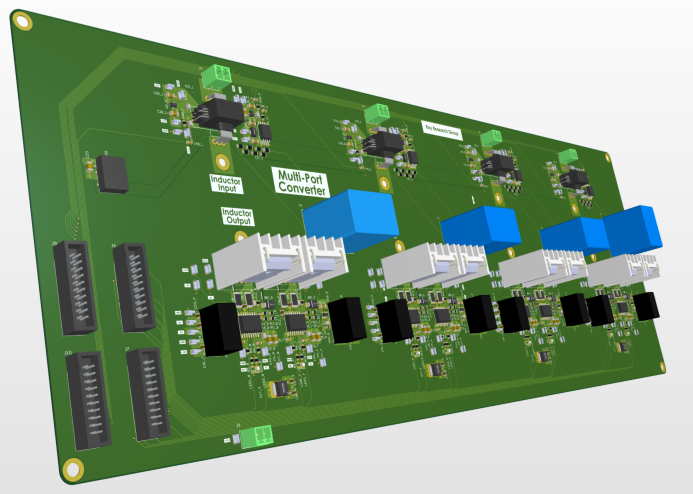
Our group develops high-gain, multi-port power converter architectures to efficiently interface renewable sources, energy storage systems, and DC loads. By extending the capabilities of the Extended-Duty-Ratio (EDR) converter, we create compact, scalable solutions for next-generation hybrid energy systems.
- Multi-Port EDR Converter:
Enables multiple input sources (e.g., PV, battery, fuel cell) to be connected to individually controlled phases, allowing independent regulation such as MPPT, battery charge/discharge control, or load management. - High Voltage Gain with Compact Design:
Interleaved inductors and switched-capacitor stages provide significantly higher voltage gain than a conventional boost converter, while distributing device stress and maintaining high efficiency. - Reduced Voltage Stress via Phase-Shift Control:
A modified phase-shift strategy minimizes switch voltage stress across wide duty-ratio ranges, enabling the use of lower-voltage, lower-loss semiconductor devices . - Bidirectional Operation:
Supports energy storage interfaces by replacing diodes with complementary active switches, enabling regulated charge/discharge and flexible power-flow control for hybrid systems. - Applications:
Renewable energy integration, hybrid DC microgrids, PV-battery systems, electrolyzers, EV charging nodes, and high-gain DC distribution.
Our work enables compact, high-efficiency power processing for modern hybrid and renewable energy systems while providing the control flexibility required for diverse source characteristics.
Space Power Management :
- Core-less magnetics & system-level optimization for deep-space reliability
- Radiation-hardened wide-bandgap (WBG) devices
- Modular + redundant architectures with interleaving
- Partial power processing → maximum efficiency, minimum mass
- Active capacitor circuits for ultra-low mass energy storage